Introduction to the Industry Program
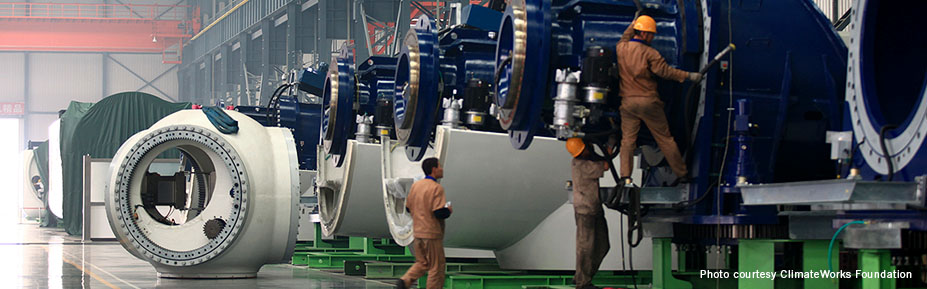
The industrial sector is the driving force behind China’s economic growth, accounting for 65 percent of energy consumption and 70 percent of China’s carbon emissions. A crucial sector for the green economy transformation, its deep decarbonization is a must for China to achieve carbon neutrality early, and will play a key role in helping accomplish the global goal of limiting warming to 1.5 degrees Celsius.Program Strategy Overview
The Overarching Goal:
The Industry Program will focus on four thrusts—structural transformation, demand reduction, energy efficiency, and low carbon energy—and in four key sectors—non-ferrous metal, petrol chemical, cement, and steel and iron. By supporting the development of strategies and sectoral goals and assisting in deep decarbonization of the heavy industry, we aim at contributing to China’s accomplishment of an early carbon peak and carbon neutrality and the achievement of multiple co-benefits during the process.
Program Initiatives:
- Support China to develop a national strategy and sectoral goal of deep decarbonization in industry, improve sectoral standards, and define implementation roadmaps;
- Assist the iron and steel sector in containing and reducing production capacity, and in promoting green and smart manufacturing by applying artificial intelligence, industrial internet of things, and digitization tools;
- Promote net-zero use of coal in China’s cement sector, and help achieve net-zero carbon emissions by scaling up the deployment of carbon capture and storage;
- Enhance dematerialization and recycling in China’s petro-chemical sector, accelerate use of clean energy such as hydrogen, and establish innovative technologies for production and processes;
- Establish an integrated circular economy system in China’s non-ferrous sector, and maximize its energy productivity and material efficiency.


